

The star has donated the entirety of his £25,000 Mercury Prize prize money to the Music Venues Trust, which operates to protect the Britain's small music venues.
He was given the cheque on 16 October as his third album People Watching was named the top album of the last 12 months.
The musician has chosen to hand the money over to the Music Venues Trust, in appreciation of the crucial part small stages had in his initial steps.
"I personally wouldn't be doing what I am doing today if it hadn't been for all the shows I performed around the region, and elsewhere, when I was just getting going," remarked Fender. "These spaces are legendary, but they are struggling."
From early 2023 onward, over 150 of these spaces have shut down – roughly 16 percent of the total UK scene.
In the last year, top acts including the band Pulp, the group Coldplay, the singer Katy Perry and Ed Sheeran have all backed the Music Venues Trust in its initiatives to help venues survive, by applying a small levy to their admission fees, which benefits smaller concert halls.
Fender also participated, generating in excess of £100,000 on his live tour to support thirty-eight grassroots venues across Britain.
The money helped locations that were confronting possible closure due to difficulties caused by water damage, blazes and personal losses, as well as licensing issues, conflicts and sound issues.
Some locations were granted financial assistance in upgrading facilities and gear that positively impacted musicians and audiences.
"The concept that revenue from shows in large arenas backs the local stages, where it begins for musicians like me, is just sensible," the star has said.
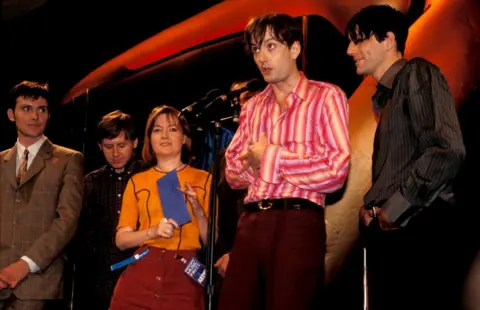
He is not the first artist to donate his Mercury Prize winnings to good deeds.
Back when the band earned the trophy in 1996 for their album Different Class, lead singer the singer stated that the group would contribute their winnings to the charity War Child.
In 2002, artist the artist split her award among several organizations, including the NSPCC and a Sickle Cell charity.
"And I contributed a grand to my local community centre, to their classes, because I did gymnastics when I was growing up and they lacked new equipment," the artist told outlets.
Two years ago, they donated their funds to the youth organization that nurtured their act, alongside other grassroots music organisations.
And the 1994 recipients they gave their winnings to a multiple sclerosis charity after a close contact was diagnosed the disease.
"The victory was ample," said singer Small. "The money was the bonus but we didn't need the extra, because we had the main prize. So our winning affected another person's life."
In the past week, the Music Venues Trust shared it had protected a couple of local spots in that region, by bringing them into public stewardship.
The Joiners in that area and The Croft in that location were purchased under the community ownership initiative, which is backed by a national body and music fans who purchase "shares" in the venues.

